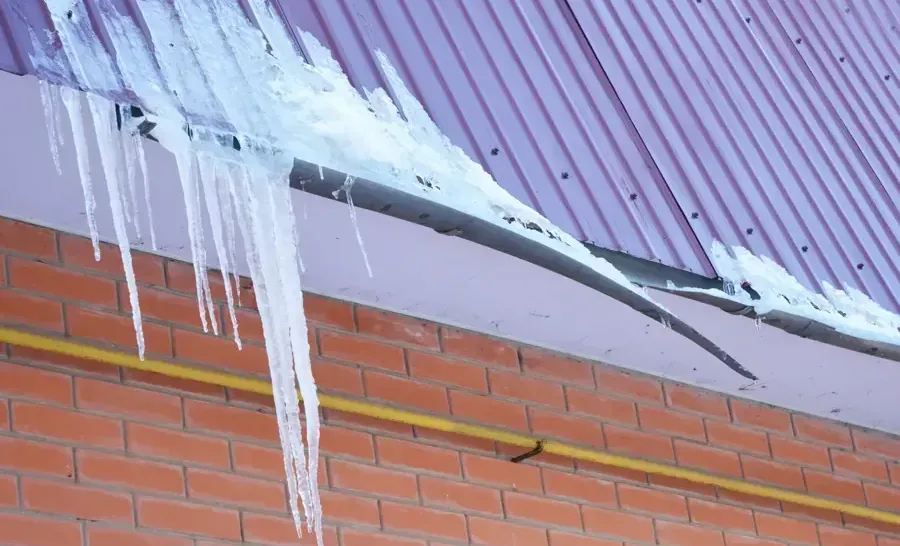
An ice dam does not need a hole in the roof. Meltwater pools behind the ice ridge and works its way under shingles into places the roof was meant to protect.
How an ice dam forms
Heat escaping into the attic warms the roof deck and melts the snow on it. The water runs down to the cold overhang, refreezes and builds a ridge, and the next melt has nowhere to go but under the shingles. Poor attic insulation and air leaks around lights and hatches make it worse, because they let warm air reach the roof deck.
- Ceiling stains below a roof edge
- Wet or compressed attic insulation
- Water streaks down an exterior wall
What the leak soaks
Insulation holds water like a sponge and presses it against ceiling drywall, so a small drip can wet a large area. Water can also follow framing into exterior wall cavities, where it stays hidden until paint peels or a stain appears.
Drying after the thaw
The crew uses meters and a thermal camera to find wet insulation, opens the ceiling where needed and dries the attic space and wall cavities. Roof repair and ice removal belong to a roofer, and the drying plan fits around that schedule. Mold can start in as little as 24 to 48 hours in wet insulation, which is why soaked material is not left in place.