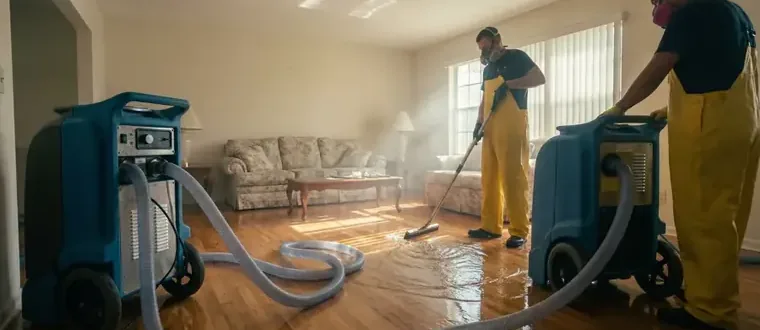
Dehumidification and air movers

Structural Drying in Prior Lake, MN

Wet framing, subfloor and concrete keep moisture long after the water is gone, so the drying crew sets dehumidifiers and air movers by measurement and checks readings every visit until the structure is dry.

(888) 432-4933Request a drying plan for the house
LGR dehumidifiers Air movers Daily readings
Prior Lake structural drying: air movers and dehumidifiers drying a room
EquipmentLGR dehumidifiers, air movers
TargetsFraming, subfloor, concrete, walls
ChecksMoisture and humidity each visit
StandardIICRC S500 drying goals
Right now

First steps for structural drying and dehumidification

  1. Stay out of the room

    Foot traffic spreads water and damages wet flooring.

  2. Lift the contents

    Move small items and furniture off wet floors.

  3. Open the space

    Open interior doors so air can circulate while you wait.

  4. Record the start

    Write down when the water began and what it touched.

Trade facts
EquipmentLGR and desiccant dehumidifiers
Air moversPlaced by wet wall and floor area
MetersPin, pinless and thermal imaging
FinishMatches a dry reference reading
The standard

How structural drying and dehumidification is held to the drying standard

Rapid local response

Active water is treated as urgent at any hour, because it keeps wicking into drywall, pad and framing after dark.

IICRC S500 drying standard

Structural drying, not just surface drying, with equipment sized to the class of the loss.

Claim-ready documentation

A moisture map, daily psychrometric readings and timestamped photos taken before any demolition.

Cold-climate know-how

Basements, frozen pipes, ice dams and spring thaw water are everyday work in the Minnesota River valley.

Typical cost ranges

What does structural drying and dehumidification cost in Prior Lake, MN?

Drying alone commonly costs from $1,000 for a small area to $8,000 or more for dense materials like hardwood or concrete, and equipment count and days of drying set the final number.

One area, light wetting

$1,000 to $2,500
  • Several air movers
  • A single LGR unit
  • Daily logs

Several rooms or a full level

$2,500 to $5,000
  • More LGR units
  • Walls and floors dried
  • Humidity logs kept

Dense materials, heavy wetting

$5,000 to $8,000+
  • Desiccant machines
  • Mats or heat on wood
  • Extended checks

Ranges are typical, not a quote. The water category, the square footage that got wet, the material class and how fast drying started move the number most. For a planning range, run the water damage cost calculator.

The process

The structural drying and dehumidification process, in order

The order matters: moisture mapping comes before equipment, and equipment stays until the readings say dry, not until it looks dry.

  1. 01

    Measure

    The crew maps wet surfaces and room volume.

  2. 02

    Set the machines

    Dehumidifiers and air movers are placed by that math.

  3. 03

    Read every visit

    Moisture and humidity readings are logged and equipment adjusted.

  4. 04

    Release the job

    Equipment comes out when materials match their dry reference.

Drying is a measured job, not a matter of running fans until it feels better. Surfaces can feel dry while the framing behind them is still wet. Drying starts after water extraction has removed the standing water, since machines cannot do that job.

Why lower levels need care

In February 2019 a main break on Green Heights Trail put a foot of water into one basement, which shows how fast a lower level can fill and how much moisture its concrete and framing absorb. Cool basement air slows drying, so equipment runs longer than it would upstairs. Heat helps when materials are dense, and mats or panels can pull water from hardwood that fans alone would not reach.

  • Concrete and block walls that hold water
  • Framing and subfloor behind finished surfaces
  • Carpet pad, insulation and trim that trap moisture

How the equipment is chosen

The crew measures the room, counts wet surfaces and sets dehumidifiers and air movers by that math. Air movers lift moisture off surfaces and the dehumidifier removes it from the air, so one without the other leaves the job half done. Temperature and humidity are read in the room and at the dehumidifier outlet, because the numbers show whether the machines are removing moisture or only moving it around.

When the drying is finished

Each material is read against a dry reference from an unaffected part of the home. When wall bottoms, floors and framing match, the equipment comes out and the daily log goes into the claim file. A job ended too soon invites mold and warped flooring, which is why the finish is a reading and not a date on the calendar.

Service area

Structural drying and dehumidification across Prior Lake and nearby towns

Service area map

Drying jobs come from every part of the city, from the lakeside homes near Spring Lake, Crystal Lake and Paradise Bay to the neighborhoods around Lakefront Park, Fish Point Park, Jeffers Pond and the County Road 21 corridor.

The same service nearby: structural drying and dehumidification in Shakopee, Eden Prairie, Chaska.

Water damage restoration in Prior Lake · every town covered

Questions

Structural Drying and Dehumidification questions in Prior Lake, MN

How many days does drying take?

Most losses need several days, and dense materials like hardwood or concrete can need longer. The readings decide when the equipment comes out.

Why are the machines so loud and hot?

Dehumidifiers warm the air as they pull moisture out, and air movers run at speed to lift it from surfaces. The warmth and noise are signs the work is happening.

Can the equipment be turned off at night?

It should keep running, because stopping lets the moisture return. If the noise is a problem, the crew can adjust placement instead.

Is drying needed if the floor already feels dry?

Usually yes. Framing, subfloor and wall cavities hold water that the surface hides, and meters show what is still wet.

Does a cool basement dry slower?

Yes. Cool air holds less moisture, so low-grain dehumidifiers and sometimes heat are added to keep drying on track.

24/7 water removal

Dry it by the numbers

Describe what got wet and for how long, and the crew sizes the dehumidifiers and air movers to the space.

(888) 432-4933Size the drying plan
Call (888) 432-4933 24/7