Business water losses

Commercial Water Damage in Prior Lake, MN

A burst pipe or backed up drain can close a shop or office, so the commercial crew extracts the water, phases the drying zone by zone and reports daily so the manager can plan around the work.

(888) 432-4933Request a commercial water crew
Phased containment Large dehumidifiers Daily reports
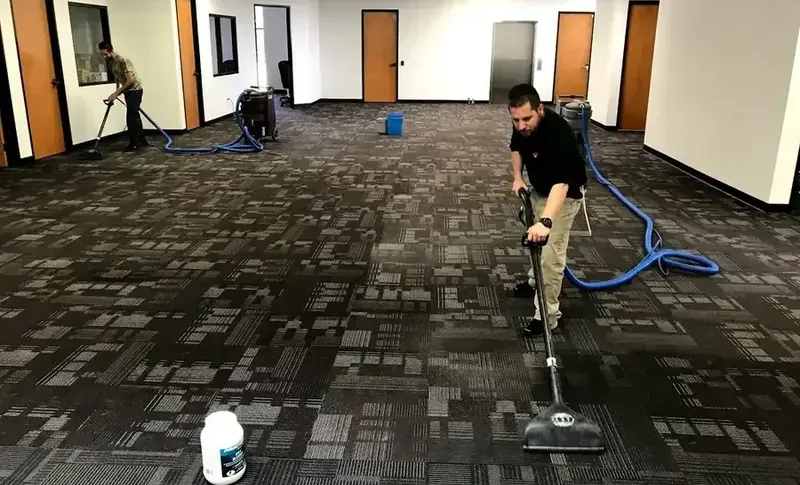
Prior Lake commercial water damage: technicians extracting water from office carpet tile
Typical sitesShops, offices, multi-unit buildings
PriorityKeep unaffected areas open
ReportingDaily readings and scope updates
EquipmentLarge extractors, desiccant units
Right now

First steps for commercial water damage

  1. Make the area safe

    Block wet walkways, mark hazards and keep staff and customers out.

  2. Shut off the source

    Close the supply valve or isolate the failed fixture.

  3. Protect stock

    Raise inventory, files and equipment onto shelves or pallets.

  4. Notify the owner

    Tell the property manager and insurer, and photograph the damage.

Trade facts
Typical sitesShops, offices, multi-unit buildings
Water typeClean supply or gray drain water
EquipmentLarge extractors, LGR and desiccant units
ReportingDaily moisture and scope updates
The standard

How commercial water damage is held to the drying standard

Rapid local response

Active water is treated as urgent at any hour, because it keeps wicking into drywall, pad and framing after dark.

IICRC S500 drying standard

Structural drying, not just surface drying, with equipment sized to the class of the loss.

Claim-ready documentation

A moisture map, daily psychrometric readings and timestamped photos taken before any demolition.

Cold-climate know-how

Basements, frozen pipes, ice dams and spring thaw water are everyday work in the Minnesota River valley.

Typical cost ranges

What does commercial water damage cost in Prior Lake, MN?

Commercial water damage here commonly runs from $5,000 for a single suite to $50,000 or more for a warehouse or large loss, and the floor area, water type and need for phasing set the final number.

One suite or unit

$5,000 to $12,000
  • Water extracted
  • Flood cuts made
  • Drying logs kept

A floor or several units

$12,000 to $30,000
  • Containment by suite
  • Big LGR units
  • Reports each day

Warehouse or large loss

$30,000 to $50,000+
  • Large-loss extraction
  • Desiccant drying
  • Zone by zone scope

Ranges are typical, not a quote. The water category, the square footage that got wet, the material class and how fast drying started move the number most. For a planning range, run the water damage cost calculator.

The process

The commercial water damage process, in order

The order matters: moisture mapping comes before equipment, and equipment stays until the readings say dry, not until it looks dry.

  1. 01

    Assess the building

    Meters and a camera map wet suites and shared spaces.

  2. 02

    Extract and contain

    Large extractors clear water, and barriers protect dry areas.

  3. 03

    Dry in zones

    Dehumidifiers and air movers run by zone, logged daily.

  4. 04

    Report and release

    Managers get daily updates until readings match dry.

A water loss in a business is a downtime problem as well as a drying one. The plan has to protect tenants, inventory and revenue while the structure dries.

Utilities and growth

The city provides water and sewer service to residents and businesses, and a 2025 city study of the southwest part of town looks at retail, business park and industrial growth. As commercial buildings multiply, so do supply pipes, roof drains and suites that can fail.

  • Suite-by-suite containment and drying zones
  • Inventory and equipment lifted or protected
  • Daily reports for owners, managers and adjusters

Phased drying

Large buildings are dried in zones, so one flooded suite does not shut down the whole floor. Containment keeps humid air from spreading, and dehumidifiers are sized for the volume of the space, not just the wet square footage. Moisture in ceiling tiles, carpet tile and shared walls can travel into neighboring suites, so the readings cover the boundaries as well as the wet space.

Roads and access

Highway 13, County Road 42 and County Road 21 are major roads through the city, and the city treats County Road 21 as a corridor to keep open during lake flooding. Crews plan water extraction equipment staging around those routes.

Service area

Commercial water damage across Prior Lake and nearby towns

Service area map

Commercial crews work along Highway 13, County Road 42 and County Road 21 and across the rest of the city, including the southwest growth area where retail, business park and industrial plans are under study.

The same service nearby: commercial water damage in Shakopee, Eden Prairie, Chaska.

Water damage restoration in Prior Lake · every town covered

Questions

Commercial Water Damage questions in Prior Lake, MN

Can a business stay open during drying?

Often, yes. Containment and zone drying keep unaffected suites and walkways in use while the wet areas are worked on.

Who gets the daily reports?

Owners, property managers and adjusters can receive the readings and scope updates, so everyone sees the same drying progress.

Does the crew handle multi-tenant buildings?

Yes. Each suite is treated as its own zone, with barriers and separate readings, so one tenant's loss does not shut down the rest.

What about sewage in a commercial space?

Sewage is Category 3 water, so affected areas are sealed off, porous materials are removed and surfaces are disinfected before reopening.

Does the size of the loss change the equipment?

Yes. Large losses use bigger extractors and desiccant dehumidifiers, while small suites need only portable units.

24/7 water removal

Keep the business moving while it dries

Share the building type, the wet areas and the tenants affected, and the crew builds a phased extraction and drying plan.

(888) 432-4933Plan the building recovery
Call (888) 432-4933 24/7