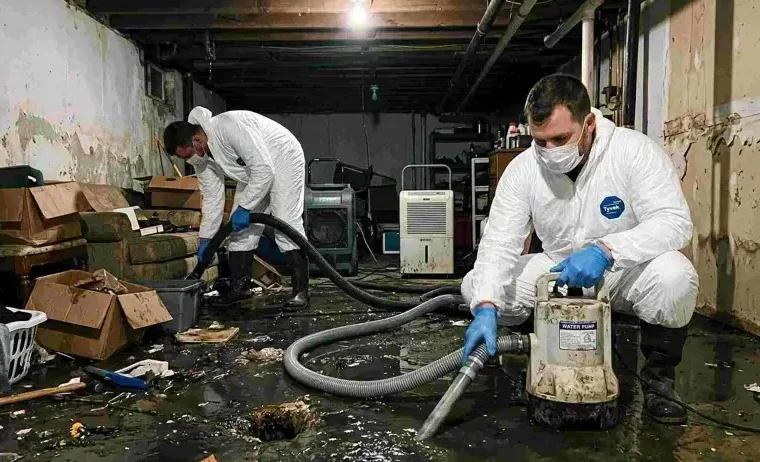
A sewage backup is a health problem first and a water problem second. Nothing should be touched, rinsed or vacuumed until the area is sealed and the crew has the right gear.
What causes backups here
The city names roots, grease and flushed items such as wipes, diapers and rags as typical blockage causes. Rags and wipes that catch in a lift station pump can back up an entire neighborhood, and the city runs 41 lift stations, so it is not always a problem inside the house.
- Roots and grease narrowing a drain
- Wipes and rags tangled in a pump
- Heavy rain overloading the system
The February 2019 example
When a main on Green Heights Trail broke, water and sewage came back through floor drains in three homes, and one family reported sewage rising through the toilet and tub. It shows how fast a drain can turn into a basement cleanup.
Cleanup and responsibility
The city says property owners handle cleaning and repairing damage a backup causes, and it asks residents who cannot tell where the blockage sits to contact Public Works so staff can find it. The crew removes porous materials, disinfects and dries the space, and keeps records that fit a sewer backup claim. Concrete and other hard surfaces can be cleaned and disinfected, but carpet, pad, insulation and soaked drywall cannot, so they are bagged and hauled out before drying begins.