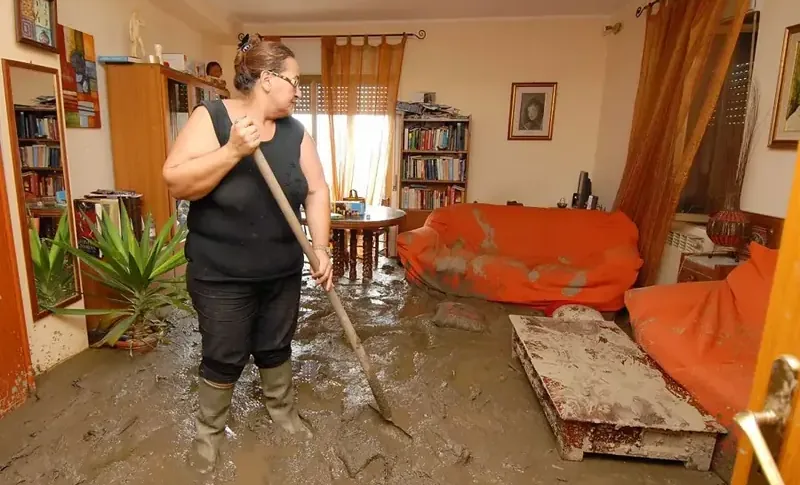
Floodwater is never clean. It picks up dirt, sewage and chemicals as it spreads, so everything it touches is treated as contaminated until the work proves otherwise.
What the lake has done before
In June 2014 record rain, 13.01 inches over 20 days, raised the lake 6 feet. Before the outlet channel was finished in July 1983, two 100-year storms hit in March and homes flooded. FEMA later lowered the lake's 100-year flood elevation to 906.9 feet, effective July 9, 2018, after older models left out the outlet channel. Dutch Avenue at Green Heights Trail floods almost every year because Cates Channel drains to that area, though the road stays passable with care.
- Carpet, pad and soft furniture soaked in floodwater
- Drywall and insulation below the water mark
- Mud and silt in wall cavities and under flooring
Mud-out and cleaning
The crew pumps out the water, then shovels and hauls out mud and silt before any cleaning starts. Hard surfaces are washed and treated with an antimicrobial, and cavities are opened so nothing wet stays hidden. Anything that cannot be washed, such as upholstery and wet insulation, is bagged and removed so contamination does not stay behind.
Drying a flooded home
A flooded house holds far more moisture than a leak does, so structural drying runs longer and uses more equipment. Readings are logged daily, and machines are added or moved until framing, subfloor and concrete match dry reference materials.