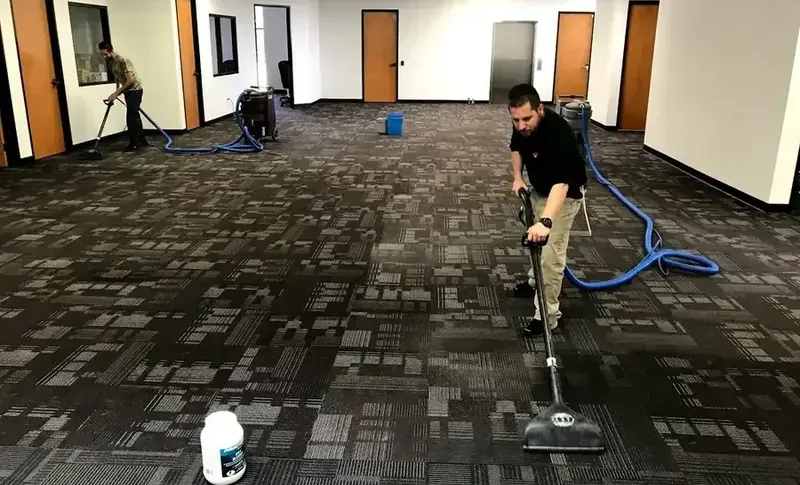
A commercial loss is a scheduling problem as much as a drying problem. Tenants, staff and inventory need protection while the water comes out, so the crew breaks the building into zones and works through them in order.
A city with room for business
The city has millions of square feet of office, industrial and retail space, corporate campuses such as Optum and a regional mall. A water loss in any of them calls for a plan sized to the building, not a house-sized one.
How phased work runs
Containment goes up around the wet zone first. Extraction, flood cuts and drying then move zone by zone, so one suite can reopen while another is still drying.
- Plastic barriers and negative air at the zone edge
- Large dehumidifiers and high-volume air movers
- Daily reports sorted by zone for managers and carriers
Large losses and dense materials
Warehouse floors and dense building materials dry slowly, so large-loss extraction is followed by desiccant dehumidifiers where regular units cannot keep up. Scope is written zone by zone so cost and progress are easy to follow.
Reporting and access
Property managers get a plain daily report: what is wet, what was done and what is next. Structural drying readings and photos go into one file for the carrier.