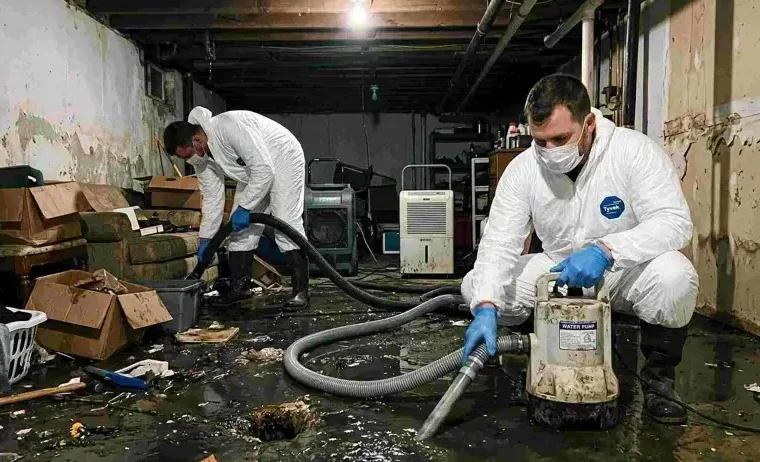
A broken water main outside a Prior Lake house can put water into a lower level faster than most owners expect. In some cases the water arrives with sewage, pushed back through floor drains.
Key takeaways
- In February 2019 a six inch water main on Green Heights Trail broke, and water and sewage reached three homes in the low area next to a lift station.
- One family reported a foot of water in the basement in about 30 minutes, with sewage coming up through the toilet and tub.
- The city says the water service enters most homes in the basement through the floor near the meter, so the main shutoff is worth finding before an emergency.
- Owners clear blockages in the service pipe and repair backup damage, and the city asks residents to contact Public Works to locate a blockage.
- Sewage in a lower level is Category 3 water, so porous materials come out and the rest is cleaned before drying.
What happened on Green Heights Trail
In February 2019 a six inch water main on Green Heights Trail broke and sent water into nearby streets and basements.
The break also pushed water and sewage back through floor drains into three homes in the low area next to a lift station.
One family reported a foot of water in the basement in about 30 minutes, and sewage coming up through the toilet and tub.
Why a main break can bring sewage into a house
A floor drain is the lowest opening in a house. When water or wastewater backs up outside, it looks for the lowest way in.
A low area next to a lift station is where that pressure can concentrate, because the drains there sit below the surrounding ground.
Two sources, one room
Clean water from the broken main and sewage from the drains can reach the same lower level together.
Once they mix, the whole volume is treated as sewage, which changes what can be saved.
Why speed matters
The foot of water that one family reported in about 30 minutes shows how little time there is to move belongings.
A lower level fills from the floor up, so what sits on the floor is lost first.
The first hour inside the house
The goal is to stop adding water, protect people and keep a record of the loss.
- Stop using water: no flushing, showers or laundry
- Shut the main water valve; the city says the water service enters most homes in the basement through the floor, near the water meter
- Stay out of the water until the power to that room is off
- Keep children and pets away from the affected area
- Photograph the water level, the drains and each damaged item
- Lift small items above the water only if it is safe to do so
Who to contact and who handles what
The city asks residents with a backup who do not know where the blockage is to contact Public Works, so staff can find the location.
Property owners are responsible for clearing blockages in the service pipe between the home and the sewer main, such as debris and tree roots, and for cleaning and repairing any damage a backup does to the property.
The city also tells residents to check their homeowner's insurance for sanitary sewer backup coverage.
- Contact Public Works to locate the problem
- Call a cleanup crew in parallel, since the house cannot wait for the pipe to be found
- Write down every call, with the time and the name of the person who answered
- Keep the receipts for anything bought or hired
What the cleanup involves
Sewage backup cleanup begins with protective gear and sealing off the affected rooms so contamination does not spread.
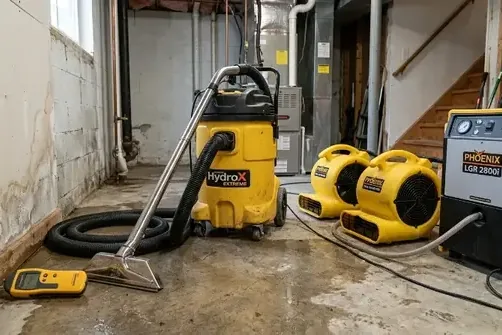
Standing water is pumped out, and basement flooding cleanup then removes the porous materials sewage reached, such as carpet, pad and the lower part of drywall.
- Extraction of every inch of standing water
- Removal of carpet, pad, lower drywall and soaked insulation
- Cleaning and disinfecting of concrete, framing and fixtures
- Drying with air movers and dehumidifiers
- Moisture readings that show when the structure is dry
Other reasons a lower level can fill
A main break is one cause, not the only one. The city lists several others that homeowners can influence or at least recognize.
Public Works maintains 41 sewer lift stations and more than 2,800 sewer manholes, and lift stations are inspected twice weekly.
Wipes and rags in lift station pumps
The city says rags, diapers and wipes caught in lift station pumps can cause backups for an entire neighborhood.
Roots, grease and flushed items such as flushable wipes are named as the typical causes of blockages in individual pipes.
Sump pump discharge
It is illegal to discharge a sump pump into the basement sewer drain or laundry tub. Pumps must discharge outside to the yard, and improper discharge can cause sewer backups.
Sewer cleaning in summer
City crews clean about one third of the sewer mains each year, mostly in summer. Air can vent into a home during cleaning and make toilet bowl water bubble or, rarely, splash out, so the city says to keep the toilet lid down.
A checklist for the day after, and drying
Once the water is out and the crew is working, a short list keeps the next steps organized.
Damp materials can start growing mold within 24 to 48 hours, so drying begins as soon as the damaged material is out.
The sewage backup cleanup service overview describes the same Category 3 process used across the area.
- Confirm with Public Works whether the cause was the city's main, a blockage or something else
- Ask the cleanup team which rooms still have wet framing and how they will be checked
- List every damaged item with a photograph and a note of where it was
- Check the homeowner's insurance for sanitary sewer backup coverage, as the city advises
- Keep a log of dates, names and what each person said
Questions
What happened in February 2019 on Green Heights Trail?
A six inch water main broke and sent water into nearby streets and basements. Water and sewage also came back through floor drains into three homes in the low area next to a lift station.
How fast can a lower level fill during a main break?
One family reported a foot of water in the basement in about 30 minutes, with sewage coming up through the toilet and tub.
Where is the main water shutoff in most homes?
The city says the water service enters most homes in the basement through the floor, near the water meter.
Who clears a blocked pipe between the house and the sewer main?
The property owner, including debris and tree roots. The city asks residents who do not know where the blockage is to contact Public Works so staff can find the location.
Why is sewage in a lower level handled differently from clean water?
It is Category 3 water. Carpet, pad and lower drywall that sewage reached are removed, and the surfaces that stay are cleaned and disinfected before drying.