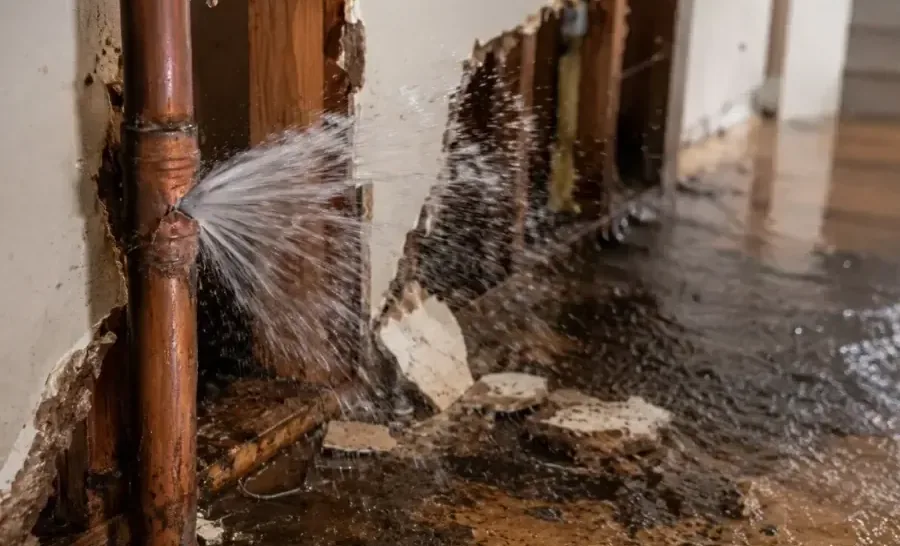
Appliance leaks are slow and sneaky. A cracked supply hose or a clogged dishwasher drain can seep for days under a cabinet or behind a washer, so the damage is often bigger than the puddle suggests.
Homes, townhomes and apartments
Single-family homes, townhomes and apartments all share the same kinds of appliances, but a leak in a shared building can reach a neighbor's ceiling or wall. In those cases the crew maps moisture in adjoining units and documents each space on its own.
What the crew opens
Water runs under flooring and behind toe kicks, so the crew removes the toe kicks, lifts wet flooring and vents the bottoms of walls to reach what the eye cannot.
- Cabinet toe kicks removed to dry the base
- Flooring lifted only where readings are wet
- Wall bottoms vented behind washers and dishwashers
Finding the source
A supply hose, a drain hose or an ice maker tube can each fail in a different way, and the crew notes which one so the repair and the claim match the loss. A leak that has run for days also calls for readings inside the wall cavity, not only on the floor.
Drying the area
Once wet materials are out, structural drying sets air movers and dehumidifiers to the kitchen or laundry space, with readings each visit until every cavity is dry.