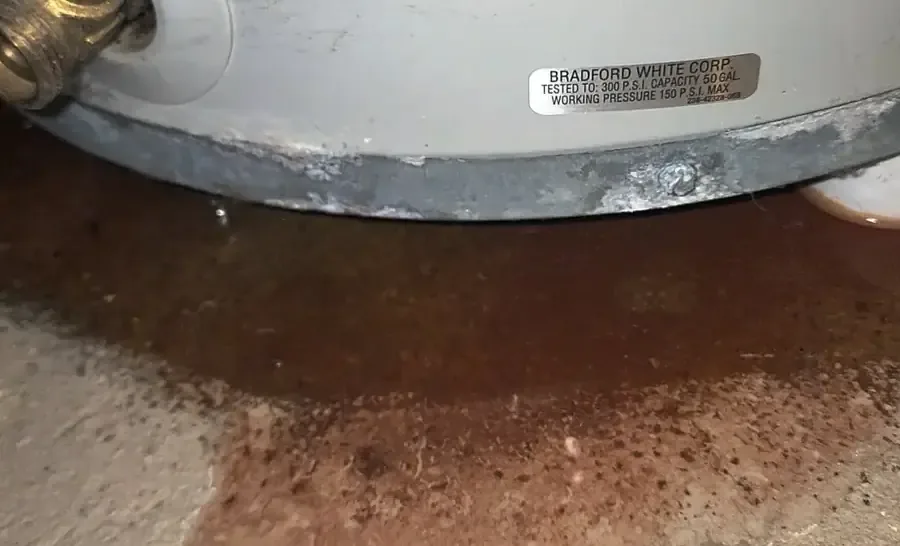
A tank holds a lot of water, so when a seam or fitting gives way the floor goes quickly. The water then travels to carpet, cabinets and wall bottoms in the next room before anyone notices.
Local water and a failed tank
The city draws groundwater from the Prairie du Chien and Jordan aquifers and softens it with lime at its treatment plant before it reaches taps. A tank that fails simply releases that treated water, so the cleanup question is how far it went, not what it carried.
What the crew removes
Clean tank water can often be extracted from a hard floor and the floor dried in place, but carpet, padding and the lower edge of drywall in the next room may need to come out.
- Water extraction from the floor and low spots
- Carpet lifted and pad removed where wet
- Wall bottoms vented or cut above the wet mark
The plumbing side
Replacing a tank is plumbing work, and plumbing permits are required in the city to alter or repair a plumbing system, so a plumber handles that step. The crew keeps to water removal and drying and records the source for the file.
Drying the utility area
Utility rooms often have little airflow, so air movers and dehumidifiers are placed to move air across the floor and into the wall cavities. Structural drying continues until readings match dry spots.