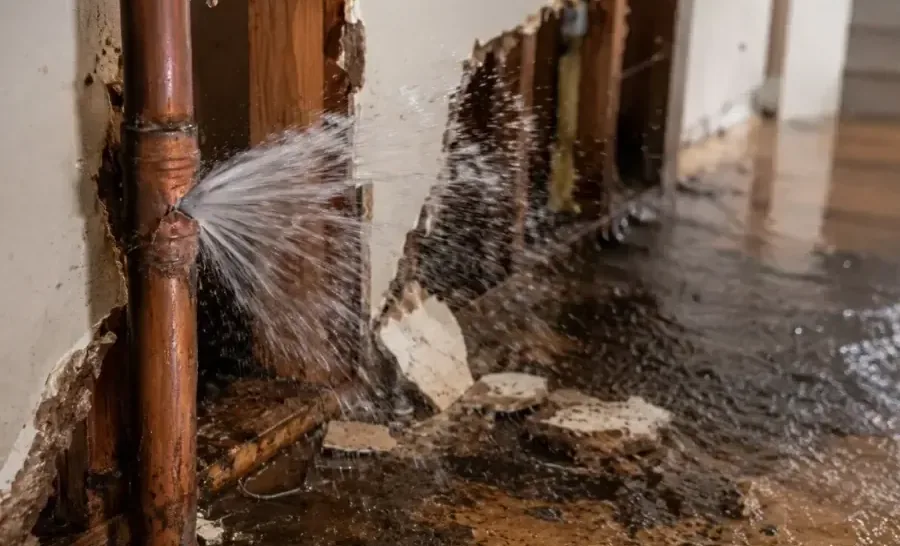
Appliance leaks are quiet. A hose that weeps behind a washer or a fitting that drips under a sink can soak the floor and cabinet base for weeks before anyone sees a stain.
Where these leaks hide
Water runs under the appliance, along the floor and into the toe kick of the nearest cabinet, where it stays out of sight. Flooring edges swell, laminate lifts and the subfloor starts to hold water long before the surface shows damage. Dishwashers and refrigerator icemakers leak at connections that sit behind a kick plate or panel, so the first sign is often a warped floor edge.
- Washer hoses and drain connections
- Dishwasher and icemaker fittings
- Refrigerator supply tubing
What the water here does
Prior Lake water measures 19.3 grains per gallon of total hardness, and the city does not soften it, so scale can build at fittings and valves over time. The city tells residents to set a home softener by that figure, but a worn hose can still fail without warning.
Opening and drying
Toe kicks come off, wall bottoms are vented with small openings, and flooring is lifted only where meters show water. Cabinets are dried in place when possible, and air movers and a dehumidifier run until the readings match dry materials. If the leak was above a finished room, that ceiling is checked too, since water drips through long before it stains.