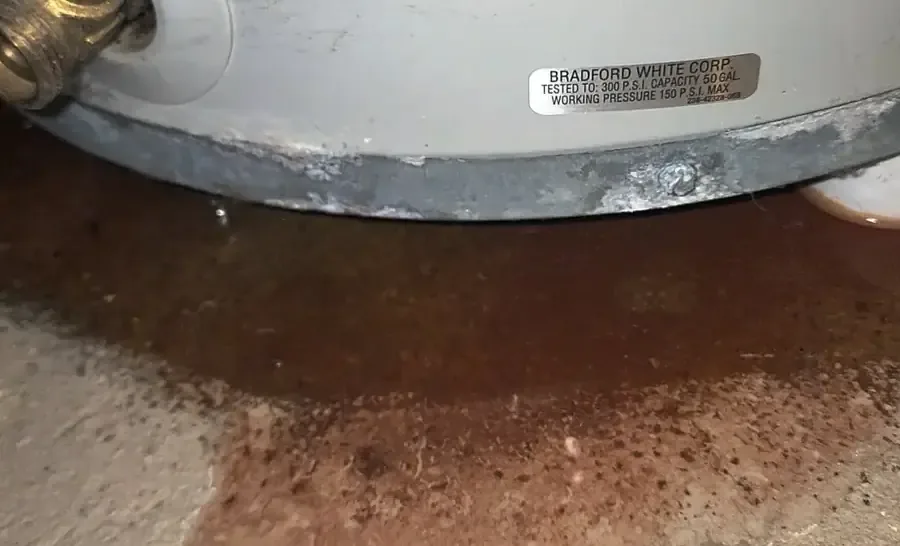
A tank leak is usually clean water, which is good news, but a full tank is a lot of water to land on one floor. Where it goes next depends on the floor drain, the slope and what is stored nearby.
Where the water travels
Concrete holds moisture long after the surface looks dry, and water slides under walls into carpeted rooms. Wall bottoms, baseboards and stored cardboard soak it up and keep releasing it, so the crew checks the next room even when the floor looks fine. A floor drain nearby can carry some of the water away, but a drain that is blocked or sits far from the tank leaves most of it spreading across the room.
- Standing water around the tank base
- Wet drywall bottoms and baseboards
- Carpet and pad in the rooms beside the utility space
Shutting it off safely
Turn off the water supply to the tank and the power or gas supply before anything else. A plumber replaces the heater or the fitting, and the cleanup crew works on the water that already escaped.
Drying around the tank
Water extraction comes first, then structural drying equipment runs on the concrete and walls. Wall bottoms are vented with small openings, and the crew keeps checking readings until the floor and walls read dry. Rusty or sediment-laden water can stain porous materials, so carpet and pad that sat in it are usually replaced rather than dried.