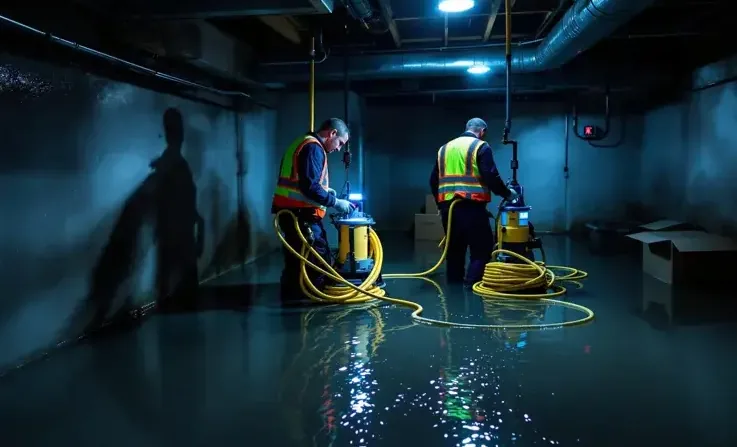
A pump fails at the worst moment, when storm runoff or snowmelt is already pushing groundwater toward the pit. The water that overflows is usually gray, so it needs more care than a clean supply leak.
What a failure leaves behind
The first area to flood is the utility room, but water follows the lowest path and reaches carpet, drywall and storage in minutes. Lake country basements stay wet longer when levels are high, because the ground around them stays saturated and keeps feeding the pit.
- Water across the concrete and under stored boxes
- Wet pad and carpet edges in nearby rooms
- Damp wall bottoms and baseboards
Gray water carries dirt and bacteria, so wet carpet pad, stored cardboard and anything porous that sat in it usually goes out instead of being dried.
Where the discharge goes
City rules say a sump pump must discharge outside to the yard, never into a basement drain or a laundry tub. Pumping into the sewer can cause sewage backups, so the crew looks at where the pipe ends while the floor is open and the pit is easy to see.
Drying after the pump is fixed
A new pump stops the source, but the structure still holds water. Extraction comes first, then dehumidifiers and air movers run until the concrete and the wall bottoms read dry. Replacing or testing the pump is a plumber's task, and the drying work goes on around that repair so the structure keeps improving while the pump is swapped.